
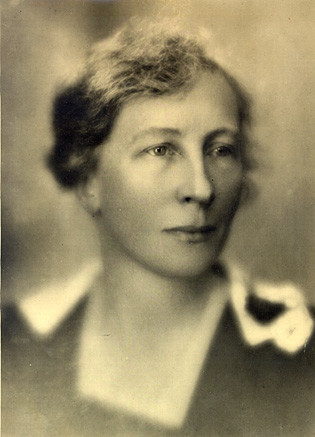
Herstory Lesson: Dr. Lillian Moller Gilbreth
Most people know her only from a classic book title – Cheaper by the Dozen. But long before she was a pop culture icon, Dr. Lillian Moller Gilbreth was the “First Lady of Engineering” and the mother of modern organizational management.
Between 1905 and 1922, Lillian gave birth to twelve children. Managing a house of fourteen people on a tight schedule was a staggering challenge. Together with her husband Frank, she turned their home into a living motion-study laboratory. They pioneered time-and-motion science—using chore charts, standardized assembly lines for breakfast, and timed bathroom schedules to prove that system, humor, and love could keep a massive family thriving.
Then, in 1924, tragedy struck. Frank died suddenly of a heart attack.
Faced with twelve children to support and a wall of corporate doors that slammed shut to female engineers, Lillian didn’t retreat. She adapted. She shifted her engineering focus from heavy machinery to the place where mothers spent their lives: the home.
Lillian interviewed thousands of women and single-handedly engineered the modern kitchen. If you’ve ever stepped on a foot pedal to open a trash can, pulled milk from a refrigerator door shelf, or moved effortlessly between your sink, stove, and fridge, you are standing in a space designed by Lillian. She created the standard kitchen “work triangle” and established uniform counter heights that remain the international standard in architecture today.
She sent all her children to college, advised six U.S. presidents, became Purdue University’s first female engineering professor, and proved that efficiency was never about cold numbers. It was about maternal strength, resilience, and designing a life big enough for twelve.





Leave a Reply
Want to join the discussion?Feel free to contribute!